|
焊接时如何分清焊渣和铁水?How to Distinguish Between Welding Slag and Molten Iron: A Guide for Beginner WeldersFor novice welders, mastering the ability to distinguish between welding slag and molten iron during the welding process is a fundamental skill that directly impacts weld quality. When welding, a layer of covering floats on the surface of the molten pool—this is commonly known as welding slag. Understanding its nature, function, and how to tell it apart from molten iron is essential for avoiding defects and achieving sound welds.
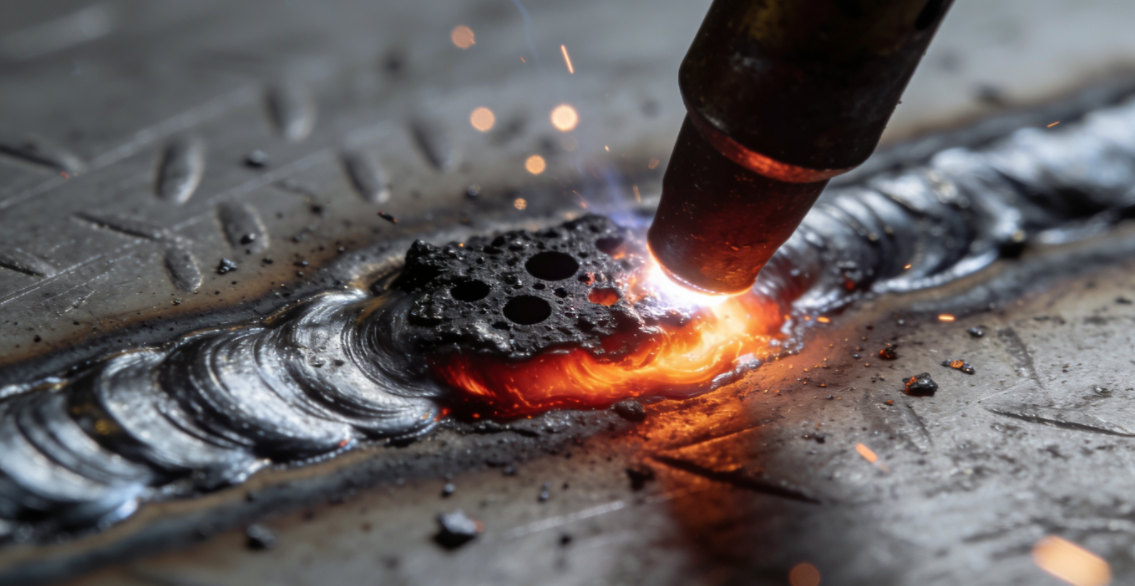
1. What is Welding Slag? Welding slag is a byproduct formed by the melting of the electrode coating and the high-temperature metallurgical reactions that occur in the weld joint during welding. Composed primarily of metal oxides, non-metallic oxides, and other mineral salts, slag has a significantly lower density than molten iron. This density difference causes it to naturally float on top of the molten pool, making it visible to the welder as a distinct layer. Visually, welding slag can be identified by its darker hue compared to the glowing molten iron. It also flows in a direction opposite to the welding travel, spreading to the rear and sides of the molten pool as welding progresses. As the weld cools, this floating layer solidifies into the slag that covers the finished weld bead. 2. The Critical Role of Welding Slag in WeldingWelding slag serves a vital protective function during the welding process. By covering the molten metal in the weld pool, it acts as a barrier that isolates the liquid iron from the surrounding air. This prevents harmful gases such as oxygen, nitrogen, and hydrogen from infiltrating the molten metal—gases that would otherwise cause defects like porosity, cracks, or brittleness in the weld. To maximize this protective effect and ensure proper weld formation, welders must pay close attention to their welding angle. Maintaining the correct angle encourages slag to flow toward the rear and sides of the molten pool, keeping the front of the pool clear for easy observation. This visibility is key to controlling weld shape and avoiding common defects like slag inclusion (trapped slag in the weld) or porosity. 3. Practical Tips for Distinguishing Slag from Molten IronSeasoned welders often share a simple yet effective observation technique for beginners: watch the flow and appearance. Molten iron glows brightly (often with a silvery or golden hue) and has a dense, fluid consistency that stays centered in the weld pool as you move forward. Welding slag, by contrast, is darker, less luminous, and behaves like oil floating on water—its lighter density causes it to drift to the edges and rear of the molten pool, separate from the main mass of molten iron. With practice, you’ll learn to recognize the subtle differences in movement and color: molten iron follows the direction of your weld travel, while slag lags behind. Keeping this distinction in mind will help you adjust your technique in real time, ensuring that slag is properly displaced and the weld pool remains clean and controlled. Final NoteDistinguishing between welding slag and molten iron is a skill that improves with experience, but understanding the science behind their formation and behavior gives beginners a head start. By recognizing slag’s protective role and using visual cues to separate it from molten iron, you’ll be able to produce cleaner, stronger welds and avoid costly rework. Always prioritize proper welding angles and observation—these small details make a big difference in weld quality. |